
Leave a Message
We will call you back soon!
Your message must be between 20-3,000 characters!
Please check your E-mail!
More information facilitates better communication.
Submitted successfully!
We will call you back soon!
Leave a Message
We will call you back soon!
Your message must be between 20-3,000 characters!
Please check your E-mail!
| Place of Origin: | China |
|---|---|
| Brand Name: | AI |
| Certification: | ISO |
| Model Number: | SDB |
| Minimum Order Quantity: | 1 Set |
| Price: | Negotiable |
| Packaging Details: | Plywood case |
| Delivery Time: | 60 days |
| Payment Terms: | T/T |
| Supply Ability: | 10 sets per month |
| Power Supply: | 220V,30A | Display: | Computer |
|---|---|---|---|
| Reference Standard: | NES 711,ISO5659-2 And ASTM E662 | Heat Flux: | 25 KW/m² Or 50 KW/m² |
| Sample Size: | 75 Mm × 75 Mm,max Thickness ≤25 Mm | Gas: | Air Compressor Air Source,propane |
| Dimension: | 2440*100*2220mm3 | Size Of Test Chamber: | 914mm X 914mm X 610 Mm |
| Color: | White | ||
| Highlight: | ISO5659-2,NES 711,ASTM E662 |
||
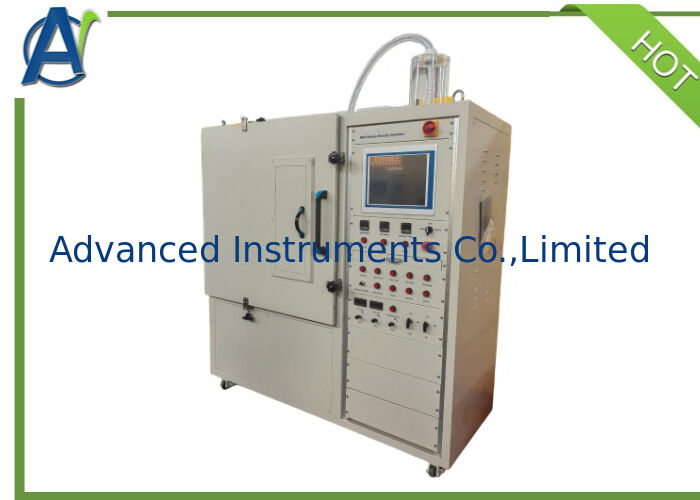
I. Product Introduction
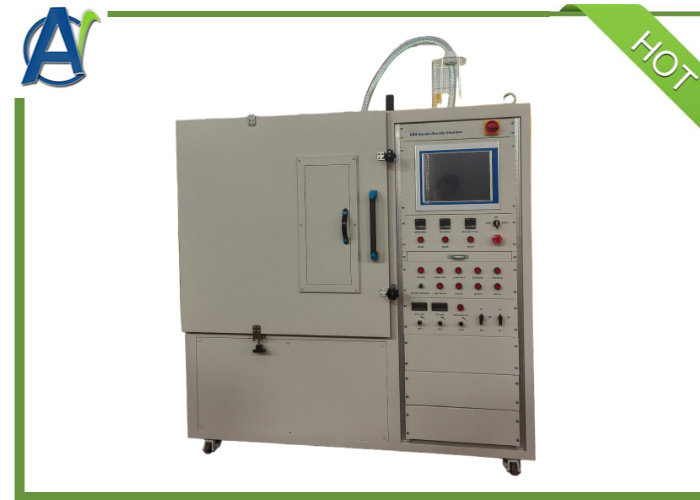
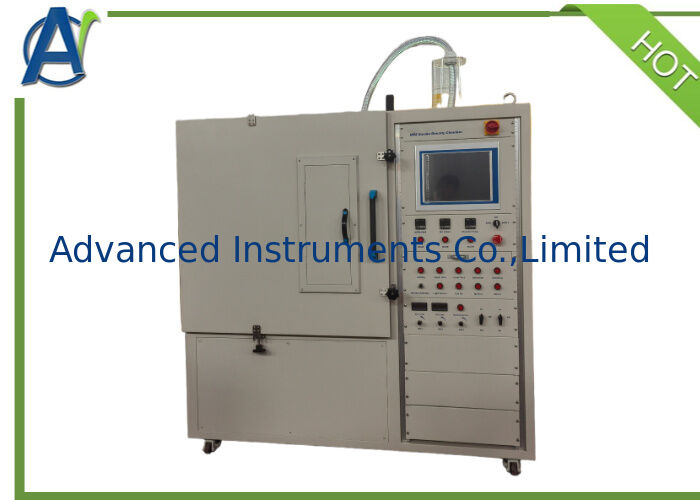
The test method of NBS smoke density test chamber is derived from the National Institute of Standards and Technology NIST (predecessor of NBS) in the United States, and has been promoted and applied in many testing fields.
This test method can be used to detect the smoke density level of plastic products,non-metallic materials in rail transit, non-metallic materials in ships, wire and cable products, etc.According to this testing method, the generally applicable standards are ASTM E662, ISO 5659-2, and the NES 711 smoke density testing method in national standards.
This test standard has more accurate test results than the previous method of building material smoke density tester. At the same time, the optical sensor uses a more precise photomultiplier tube, which can capture the subtle changes in smoke content in the box; If other testing devices are selected, such as the Delge gas detection tube, aviation standard smoke toxicity testing can be carried out, and it can be connected with the FTIR Fourier infrared transform equipment to complete qualitative and quantitative analysis of smoke content.
II. Performance characteristics
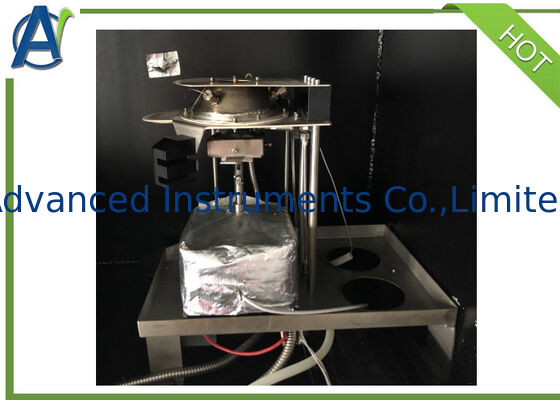
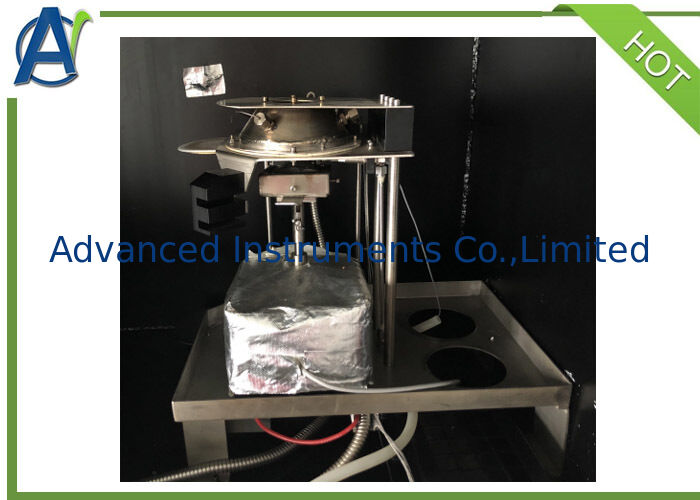
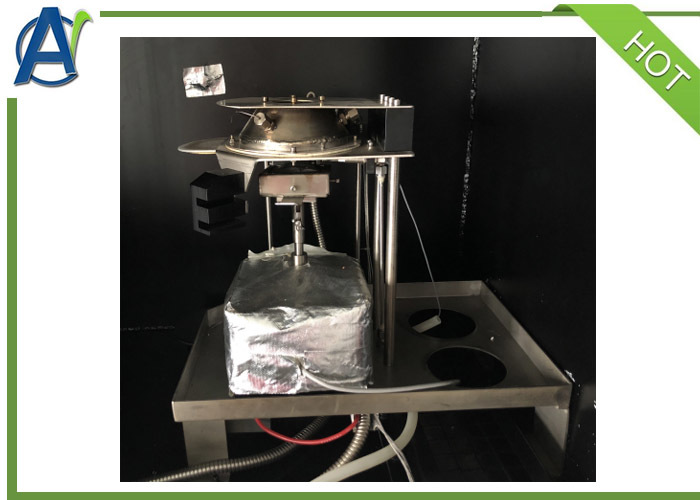
1. The internal dimensions of the smoke density box testing chamber are 914mm X 914mm X 610 mm, and both the inner and outer walls are treated with PTFE coating, which can resist the erosion of strong corrosive gases and greatly extend the service life of the box;
2. The box adopts a fully open door design scheme, which makes it easier for users to clean the inside of the testing box. When replacing different standard testing accessories, the efficiency can also be greatly increased;
3. Install auxiliary heating devices on the outer wall of the test box compartment, and set the temperature inside the box according to different standard requirements;
4. Install explosion-proof aluminum foil device inside the box, which can reduce the personal risk of testing personnel in case of accidents;
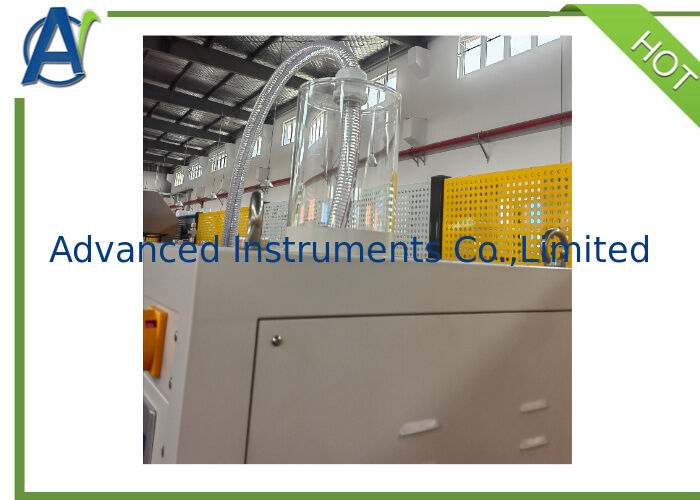
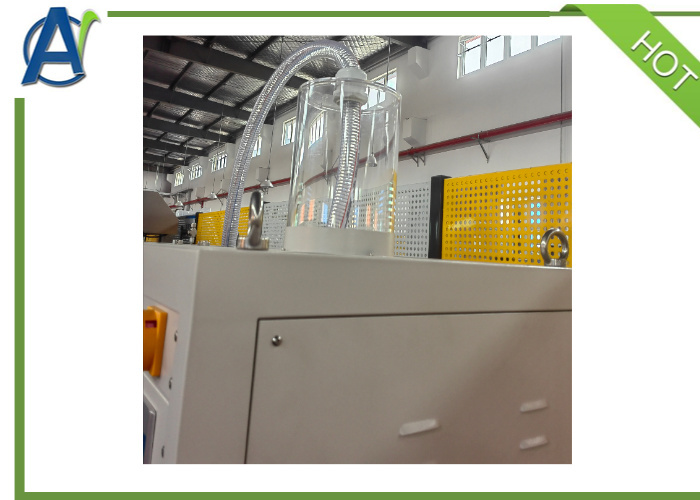
5. There is a pressure relief port at the top of the box, which is connected to a pressure regulating capacity bottle and can adjust the internal pressure of the box;
6. Both the top and bottom of the box are equipped with automatic moving cylinders for inhaling and discharging smoke;
7. Equipped with ASTM E662 radiation furnace device, it can provide 25KW/M2 thermal radiation output;
8. Equipped with an ASTM E662 standard six head burner, it can be used in conjunction with a radiation furnace for flame combustion testing;
9. Provide air-cooled copper plate calorimeter, which can adjust its surface temperature using back cooling method during testing;
10. Equipped with ISO 5659-2/GB/T8323 radiation cone device, it can provide 50KW/M2 thermal radiation output;
11. Provide ISO 5659-2/GB/T8323 standard open flame burners, which can be used for flame combustion testing with a radiation cone;
12. Provide SB water-cooled heat flow meter, with accompanying standard measurement certificate;
13. It can be equipped with a self circulating cooling water source, without the need for an external cooling water source, making it convenient for users to use;
14. Equipped with a weighing device, capable of conducting MOD smoke density testing and material thermogravimetric testing;
15. The sensor has a range of 0-2000g and an accuracy of 0.1g;
16. Equipped with NES 711 open flame burner and mixing fan(Optional);
17. The switching between the radiation furnace and the radiation cone is connected by aviation joints, and users only need to plug and unplug to complete the replacement between different standard testing devices;
18. An optical cassette is installed on the top of the box, and the light source is a side window type photomultiplier tube with S-4 frequency response. The transmittance accuracy can reach 0.0001%;
19. It can automatically switch to three levels: Clear, Filter, and Dark based on changes in smoke density status;
20. Installing ND2 neutral expansion filter in the cassette not only facilitates user self calibration but also automatically switches gears during testing;
21. The lower part of the box is an incandescent light source, which can provide uniform light spot output;
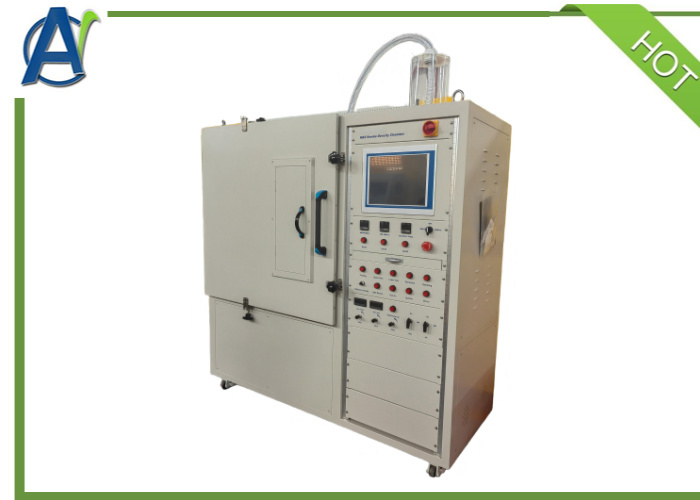
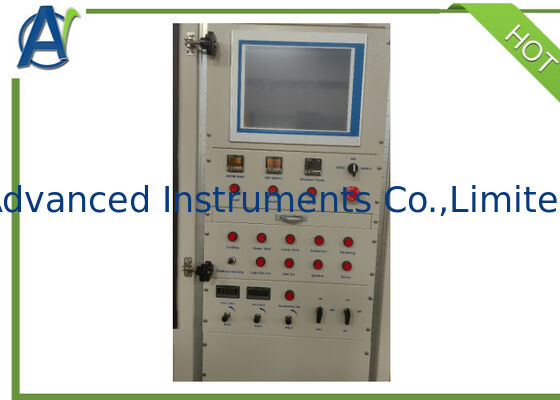
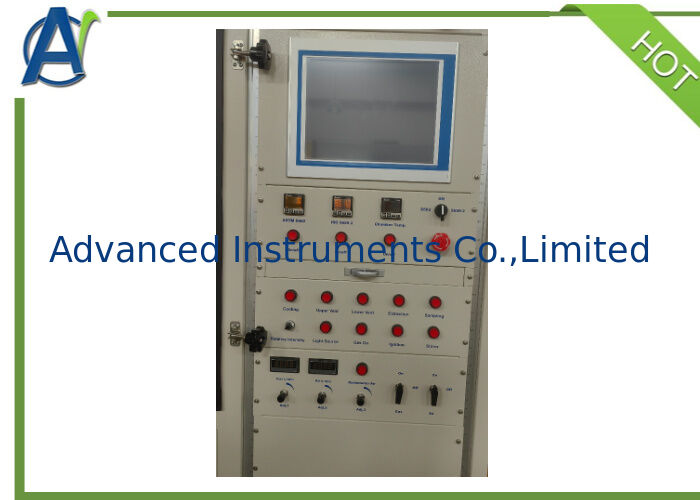
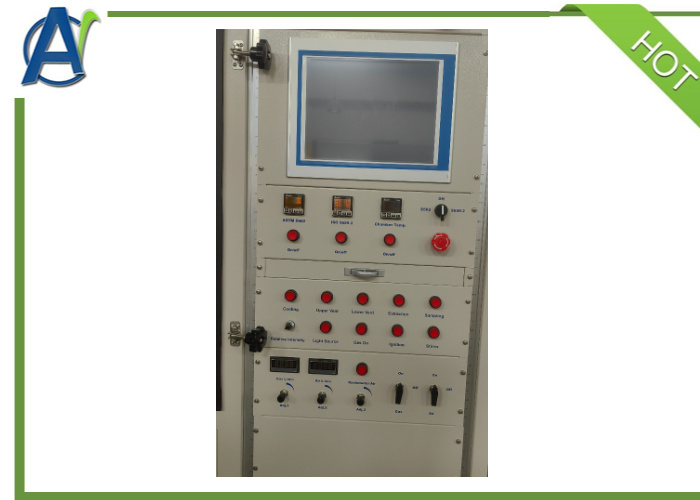
22. The smoke density testing box is designed as an integrated system, equipped with a touch screen computer. Users can use testing software to set and control the entire process through the computer
III.Installation Requirements
|
S.N. |
Dimension |
2440*100*2220 mm3 |
|
1 |
Weight |
610KG |
|
2 |
Application |
Aviation parts,railways,Cable etc |
|
3 |
Power supply |
220V,30A |
|
4 |
Ambient temperature |
10 ℃ to 35 ℃ |
|
5 |
Gas |
Air compressor air source,propane |
![]()
Both standards use the NBS single closed smoke chamber and measure specific optical density (Ds) of
smoke by light attenuation. But the specimen mounting, heater type, heat flux and application scope differ
significantly. Test results are NOT directly interchangeable between the two standards.
| Item | ISO 5659-2 | ASTM E662 |
|---|---|---|
| Full title | Plastics — Smoke generation — Part 2: Determination of optical density by a single-chamber test | Standard Test Method for Specific Optical Density of Smoke Generated by Solid Materials |
| Issuing body | ISO (International Organization for Standardization) | ASTM International (US standard) |
| Specimen orientation | Horizontal (sample face upward) | Vertical (sample mounted upright) |
| Radiant heater | Cone heater | Flat radiant panel furnace |
| Heat flux options | 25 kW/m² or 50 kW/m² (user selectable) | Fixed 25 kW/m² |
| Specimen size | 75 mm × 75 mm, max thickness ≤25 mm | 75 mm × 75 mm, max thickness ≤25.4 mm (1 inch) |
| Ignition | With or without pilot flame; both flaming / non-flaming pyrolysis | With or without pilot flame; flaming / non-flaming modes |
| Primary application | Plastics, also rubbers, coatings, textiles, wood; widely used for railway, marine, EU fire safety | General solid materials; widely used in North America for building, aircraft, interior materials |
| Core difference summary | Horizontal sample + cone heater, two heat flux levels | Vertical sample + flat panel heater, fixed 25 kW/m² |
1.Same chamber, same photometric measurement principle, but the different heat delivery and sample
orientation create different thermal decomposition conditions. A material will usually yield different Ds values
between ISO 5659-2 and ASTM E662. Do not cross-compare Ds numbers.
2.ISO 5659-2 allows the higher heat flux (50 kW/m²), which simulates more severe fire exposure.
3.ASTM E662 is the historic original NBS smoke chamber method; ISO 5659-2 adapted the chamber but
redesigned the heating and sample setup.